By Jambi Property Management
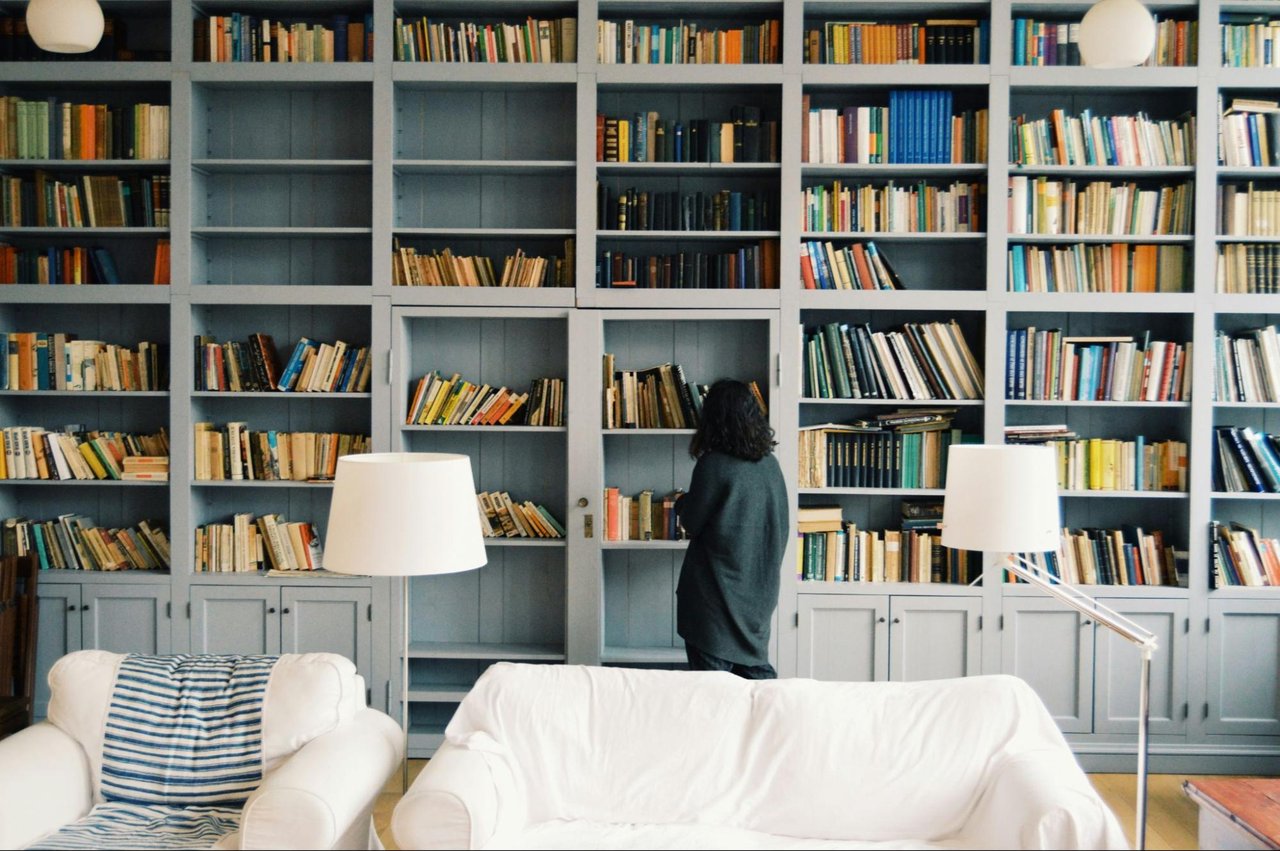
A home library does not require a dedicated room, a rolling ladder, or a floor-to-ceiling wall of leather-bound classics. What it requires is intention — a decision to give your books and your reading life a real home rather than letting volumes stack up on nightstands and accumulate on every flat surface until they become clutter rather than a collection. Done thoughtfully, a home library is one of the most personal and enduring improvements you can make to a space.
Key Takeaways
- The best home library starts with a clear purpose — knowing how you will use the space shapes every decision that follows
- Shelving choice depends on your timeline, budget, and how permanent you want the solution to be; built-ins, modular units, and freestanding shelves each have distinct advantages
- Organization systems work best when they match how your brain actually retrieves books — the "right" system is the one you will maintain
- Lighting, seating, and atmosphere are not afterthoughts; they determine whether the space gets used
- A home library is a living space — plan for growth and revisit the collection regularly
Define the Purpose First
Before choosing shelving or arranging a single book, decide what role the library will actually play in your daily life. A reading sanctuary calls for different design decisions than a home office with an integrated book collection. A family resource center that needs to work for multiple generations looks nothing like a curated display of first editions and personal favorites.
Questions worth answering before you start:
- Is this primarily a reading space, a storage solution for an existing collection, or both?
- Will the library serve one person or a household with different reading habits and age ranges?
- Do you prefer quiet solitude when you read, or do you tend to read alongside other activity in the home?
- How large is your current collection, and how quickly does it grow?
The answers steer everything from the room you choose — a quiet corner away from foot traffic reads very differently than an open alcove off the main living area — to whether you invest in fixed built-ins or keep the shelving flexible.
Choosing the Right Shelving
Shelving is the foundation of any home library, and the choice between built-ins, modular units, and freestanding shelves involves real trade-offs worth thinking through before committing.
Shelving options compared:
- Built-in shelving is the premium option — it uses space efficiently, looks seamless with the room's architecture, and becomes a genuine selling point if you ever list the property. The limitation is permanence; built-ins are difficult to reconfigure and cannot move with you
- Modular shelving systems offer the best balance of flexibility and polish for most homeowners. They can be added to as the collection grows, rearranged when tastes change, and taken with you if you move. Quality modular systems, properly secured to walls, hold significant weight and can look as considered as custom work
- Freestanding shelves are the most accessible entry point — available in a wide range of styles and price points, movable, and requiring no installation beyond anchoring tall units to the wall for safety
Regardless of what you choose, think vertically. Floor-to-ceiling shelving maximizes storage without consuming floor space, and taller configurations benefit from a rolling library ladder — both functionally and aesthetically. Keep frequently accessed books at eye level, reserve upper shelves for reference materials or less-used volumes, and store oversized books horizontally to prevent warping.
Organizing Your Collection
There is no universally correct way to organize a home library, and the most elaborate system is worthless if you will not maintain it. The goal is retrieval — you should be able to find a specific book without searching for it, and browsing should feel enjoyable rather than chaotic.
Common organization approaches and when each works best:
- By genre or subject: The most functional approach for large, mixed collections; keeps similar material together and makes browsing intuitive
- By author: Works well for fiction collections where you tend to read within authors rather than across genres
- Alphabetically by title: The simplest system, best for smaller collections where memorability matters more than browsing
- By color: A visually arresting choice that prioritizes aesthetics over retrieval; works best as a secondary organizational layer within a genre or section rather than a primary system
- By favorites or read status: A personal and honest system — keeping what you love most at eye level and most visible is a reasonable organizing principle
One underrated habit from professional librarians: pull everything off the shelves and do a full reassessment at least once a year. It forces you to confront what you actually want to keep, creates an opportunity to identify candidates for donation, and resets the organization before drift becomes disorder.
Light, Seating, and Atmosphere
A home library that looks beautiful but is uncomfortable to use for more than ten minutes has failed its primary purpose. The physical experience of being in the space — the quality of the light, the comfort of the seating, the ambient feel — determines whether the room becomes somewhere you actually go.
What to prioritize in your library's atmosphere:
- Lighting: Overhead ambient light alone is not enough. A well-placed task lamp beside the reading chair and directional lighting on shelves for browsing are both necessary. Warmer color temperatures — around 2700K to 3000K — create a more inviting atmosphere than cool, blue-white light
- Seating: A single well-chosen reading chair with proper back support is worth more than multiple pieces of mediocre furniture. Position it near natural light if possible, away from direct sunlight that will fade book spines and covers over time
- Temperature and humidity: Books prefer a relatively stable environment — roughly 64 to 72°F with moderate humidity between 30% and 55%. Avoid placing shelves on exterior walls that see dramatic temperature swings, and keep the library out of direct sunlight paths
Personal touches are what transform a functional storage space into a room you want to spend time in. Framed prints, objects from travels, small plants, a few items that have nothing to do with books — these details give the library character and make it feel genuinely yours rather than staged.
FAQs: Building a Home Library
How do I handle a collection that keeps growing?
Plan for expansion from the start by choosing shelving that can add units over time, and commit to regular culling as a counterbalance. A reasonable rule of thumb: if a book comes in, consider whether something should go out. The most satisfying home libraries are curated rather than accumulated — keeping what you genuinely love and letting go of what you will not read again creates a collection that reflects who you are now rather than who you thought you would be.
Does a home library add value to a Manhattan Beach home?
Built-in shelving and a well-designed library space can be meaningful selling points, particularly in a market like Manhattan Beach where buyers are sophisticated and appreciate quality finishes. A dedicated library or reading room signals a certain quality of life that resonates with the right buyer. Freestanding shelving is portable and adds value to your daily experience without the same resale impact.
Is it worth digitally cataloging a large collection?
For collections over a few hundred books, yes. Apps that allow barcode scanning make it straightforward to track what you own, avoid buying duplicates, and manage a lending system if you share books with friends or family. The time investment pays off for serious collectors.
Create a Space Worth Coming Home To
A home library, done well, is one of the most personal rooms in a house — a direct reflection of the life lived inside it. In Manhattan Beach, where homes often serve as a genuine sanctuary, a thoughtful reading space adds real daily value.
Reach out to us at Jambi Property Management to learn more about finding a Manhattan Beach home with the space and character to support the lifestyle you want.