By Jambi Property Management
There is a version of the dinner party that lives in people's imaginations — the one where every course lands perfectly, the table looks like a magazine shoot, and the host moves effortlessly between kitchen and conversation. That version creates more anxiety than it prevents. The dinner parties that actually become memories are the ones where the food is genuinely good, the room feels warm, and guests leave with the sense that they were actually wanted there. Getting to that outcome is less about perfection and more about planning the right things in the right order.
Key Takeaways
- Keep the guest list between six and ten people — small enough to feel intimate, large enough to generate real energy at the table
- Menu planning should favor dishes you can make ahead; the goal is to be present with your guests, not tied to the stove
- The table setting and atmosphere do more work than most hosts realize — lighting, music, and a considered table communicate welcome before a single plate is served
- Collecting dietary restrictions before you plan the menu, not after, saves stress and last-minute scrambling
- The host's energy sets the room — a relaxed host creates a relaxed party, even when things do not go according to plan
Start With the Guest List
The size and composition of your guest list shape everything that follows. A dinner for six feels like a conversation. A dinner for sixteen feels like event management. For most hosts — and certainly for anyone hosting for the first time — six to eight people is the sweet spot.
How to build a guest list that works:
- Choose people who will enjoy each other, not just you — a table that generates good conversation is more memorable than a table with superior food
- Invite people who know each other alongside one or two who do not, to keep energy from becoming insular
- Collect dietary restrictions and preferences when you send the invitation, not the day of — this shapes your menu and prevents last-minute panic
- Send invitations two to three weeks out for a sit-down dinner; this gives guests time to actually clear their evening and signals that the occasion matters
In Manhattan Beach's social culture, where people's schedules fill up fast and casual last-minute plans are common, a dinner invitation with genuine advance notice stands out.
Plan a Menu You Can Execute Without Stress
The most reliable rule in dinner party menu planning is this: choose dishes you have made before, at least one of which can be fully prepared in advance. Cooking a recipe for the first time for guests is a gamble that rarely needs to be taken.
A menu structure that works reliably:
- Welcome bite or charcuterie: Something for guests to graze on as they arrive and settle in — a well-built cheese board, marinated olives, or a simple dip with good bread handles the first 30 to 45 minutes without requiring any hosting attention
- First course: A simple salad, soup, or plated starter that can be portioned before guests sit down
- Main course: The anchor of the evening — roasted proteins, braised dishes, and whole roasted fish all work beautifully because they go in the oven and largely take care of themselves while you are with your guests
- Sides: Two or three, with at least one that can be made ahead or holds well at room temperature
- Dessert: Something that requires no last-minute cooking — a bought tart, a made-ahead chocolate mousse, or quality ice cream with a simple topping gets the job done without pulling you away from the table
California's coastal abundance works in a Manhattan Beach host's favor. Fresh seafood, seasonal produce from local markets, and excellent wine available nearby make the raw materials of a great dinner party more accessible here than almost anywhere.
Set the Atmosphere Before Guests Arrive
The atmosphere of your dinner party begins before a single dish is served. What guests walk into — the light level, the music, the smell of something good already cooking — determines their emotional state for the rest of the evening.
Elements of atmosphere worth getting right:
- Lighting: Turn down overhead lights and add candles. This is the single most effective and least expensive thing you can do to make a dining room feel warm rather than clinical. Two or three candles at different heights on the table does more than a centerpiece arrangement
- Music: A playlist running at a volume where conversation is easy but silence would be noticeable — roughly 20% to 30% of normal listening volume. Build it before the party so you are not managing it while greeting guests
- Scent: Something cooking smells good; a freshly cleaned home smells better than any candle. Avoid heavy fragrance in the dining area, which competes with the food
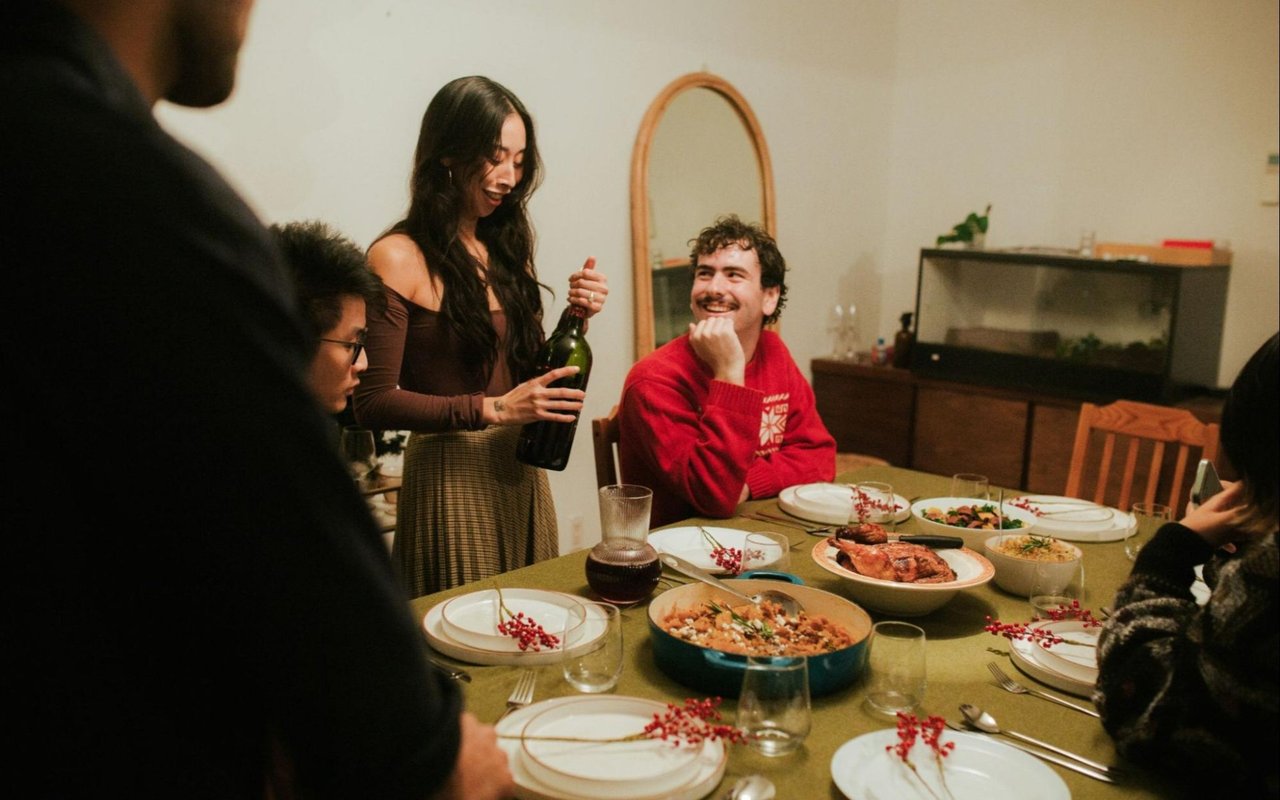
- Table setting: The table communicates before the first course arrives. Clean linens, real glasses (mismatched vintage glasses read charming, not cheap), and a simple centerpiece that does not block sightlines across the table — low flowers, candles, or a few simple objects — signal care without demanding performance
Execute the Evening With a Timeline
The dinner parties that feel effortless are the ones where the host built a timeline and did most of the work before guests arrived.
A day-of timeline that keeps you present:
- Morning: Grocery run complete, any braises or slow-cooked dishes started, table set, house cleaned
- Two to three hours before guests arrive: Any advance-prep dishes finished, dessert ready, wine opened to breathe or chilling, music playlist ready
- One hour before: Shower and get dressed without rushing — being ready before your first guest arrives is the single most composure-preserving thing a host can do
- As guests arrive: Welcome drink in hand, starter food out, oven timer set for the main course
- During the party: Resist the urge to disappear into the kitchen; your presence at the table is more valuable than perfect timing on a side dish
The goal is to spend the evening at the table with your guests, not executing a restaurant service. When something does not go perfectly — and something usually does not — a relaxed host makes it irrelevant.
FAQs: Hosting a Dinner Party
How do I handle guests with very different dietary restrictions?
Collect restrictions before you plan the menu, then build around them rather than accommodating them as an afterthought. A menu that is naturally vegetarian or that keeps proteins separate from starches and vegetables is almost always easier to adapt. Having one clearly labeled dish that works for everyone — even if the table also has other options — means no guest spends the evening wondering what they can eat.
What is the right amount of wine to have on hand?
A common guideline is one bottle of wine for every two guests for the full evening, plus one extra. For a dinner of eight, seven to eight bottles — a mix of white for the earlier part of the evening and red for the main course — covers most scenarios. Keep an extra bottle accessible in case the evening runs longer than planned.
How do I keep conversation going if the energy drops?
A well-placed question does more than any party game. Something like "What was the last meal you had that genuinely surprised you?" or "What is a place you have been meaning to go but have not made it to yet?" restarts a stalled table without the artificiality of a structured activity. The best dinner conversations are guided, not forced — knowing two or three genuine questions in your back pocket is enough.
Host the Kind of Evening People Remember
A well-executed dinner party in a home you love, with people you genuinely want to gather, is one of the most rewarding things you can do with your Manhattan Beach property. The best homes are made for exactly this.
Reach out to our team at Jambi Property Management to learn more about buying or selling a Manhattan Beach home that suits the way you actually want to live.
Reach out to our team at Jambi Property Management to learn more about buying or selling a Manhattan Beach home that suits the way you actually want to live.