By Jambi Property Management
One of the quieter advantages of owning your home — rather than renting — is the freedom to design each room around how you actually want to live. In Manhattan Beach, where the coastal lifestyle already leans toward wellness and outdoor activity, it's worth putting genuine thought into the one room that shapes your health more than any other. Here's what the research and design trends tell us actually works when it comes to building a bedroom that supports deep, restful sleep.
Key Takeaways
- Temperature, light, and sound are the three environmental factors most directly linked to sleep quality
- Bedroom design has shifted toward calm, tactile spaces that signal the nervous system to wind down — and the research supports this approach
- The right furniture placement, material choices, and lighting decisions compound over time into meaningfully better rest
- Removing electronics and work triggers from the bedroom is one of the highest-return changes most people can make
Temperature: The Factor Most People Underestimate
The National Sleep Foundation identifies room temperature as one of the most significant variables in sleep quality, with researchers generally recommending between 60 and 67 degrees Fahrenheit for optimal rest. In Manhattan Beach, where summer evenings can stay warm and ocean breezes vary night to night, thoughtful temperature management in the bedroom is worth the attention.
A bedroom that runs too warm disrupts the natural drop in core body temperature the body needs to transition into deep sleep. If your current setup has you waking at 2 a.m. or kicking off covers, that's a design and environment problem — not just a personal quirk.
A bedroom that runs too warm disrupts the natural drop in core body temperature the body needs to transition into deep sleep. If your current setup has you waking at 2 a.m. or kicking off covers, that's a design and environment problem — not just a personal quirk.
Practical temperature management for a Manhattan Beach bedroom:
- Keep the thermostat between 65 and 67 degrees for most adults, adjusting slightly based on personal baseline
- Choose breathable, natural-fiber bedding: linen and cotton regulate temperature far better than synthetic materials, which trap heat through the night
- Use a ceiling fan set to run counterclockwise in warm months to create a cooling downdraft without overcooling the space
- Position the bed away from vents blowing directly at your face, which disrupts sleep even when the overall room temperature is comfortable
Control Light Like the Sleep Tool It Is
Light is the primary signal the body uses to regulate its circadian rhythm, and your bedroom's light environment matters from the moment the sun sets to the moment it rises. Overhead lighting, screens, and street-facing windows all work against the melatonin production your body needs to wind down.
The 2026 design direction for bedrooms has moved decisively toward layered, warm-toned lighting that supports the body's natural transition into rest. Cordless and portable lamps placed lower in the room — rather than overhead fixtures that spread light broadly from above — create a softer, more grounded glow that sleep researchers link to better melatonin production.
The 2026 design direction for bedrooms has moved decisively toward layered, warm-toned lighting that supports the body's natural transition into rest. Cordless and portable lamps placed lower in the room — rather than overhead fixtures that spread light broadly from above — create a softer, more grounded glow that sleep researchers link to better melatonin production.
Lighting choices that support sleep:
- Blackout shades or curtains on east- and street-facing windows: Manhattan Beach mornings arrive with strong light; full blackout on the windows that face the sun prevents early waking
- Warm-toned bulbs throughout the bedroom: Aim for 2700K or below in any bulb used in the hours before sleep; cool daylight-spectrum bulbs in the bedroom are counterproductive at night
- Portable lamps placed lower in the room: These create a grounded, ambient glow rather than the broad overhead spread that suppresses melatonin
- A screen curfew at least 30 minutes before bed: Blue-light exposure from phones and tablets delays sleep onset even after the device is put down
Sound: The Easiest Variable to Improve
Noise is among the most disruptive sleep variables, and it's often the easiest to address. Whether it's street traffic on a busy Manhattan Beach block, neighbors, or a partner with a different schedule, minimizing noise intrusion during sleep produces measurable improvements in rest quality.
Sound management for your bedroom:
- A white noise machine or app: Creates a consistent audio background that masks sudden sounds — traffic, voices, and ambient noise — without adding stimulating content
- Heavy curtains or acoustic window treatments: Soft, layered fabric on windows absorbs sound in addition to controlling light
- Area rugs and upholstered furniture: Hard flooring and bare walls create echo; rugs and fabric furnishings absorb ambient noise and make the room quieter overall
- Keeping the bedroom door closed: A simple change that creates a meaningful sound buffer between the sleeping space and the rest of the home
Design the Room to Signal Rest
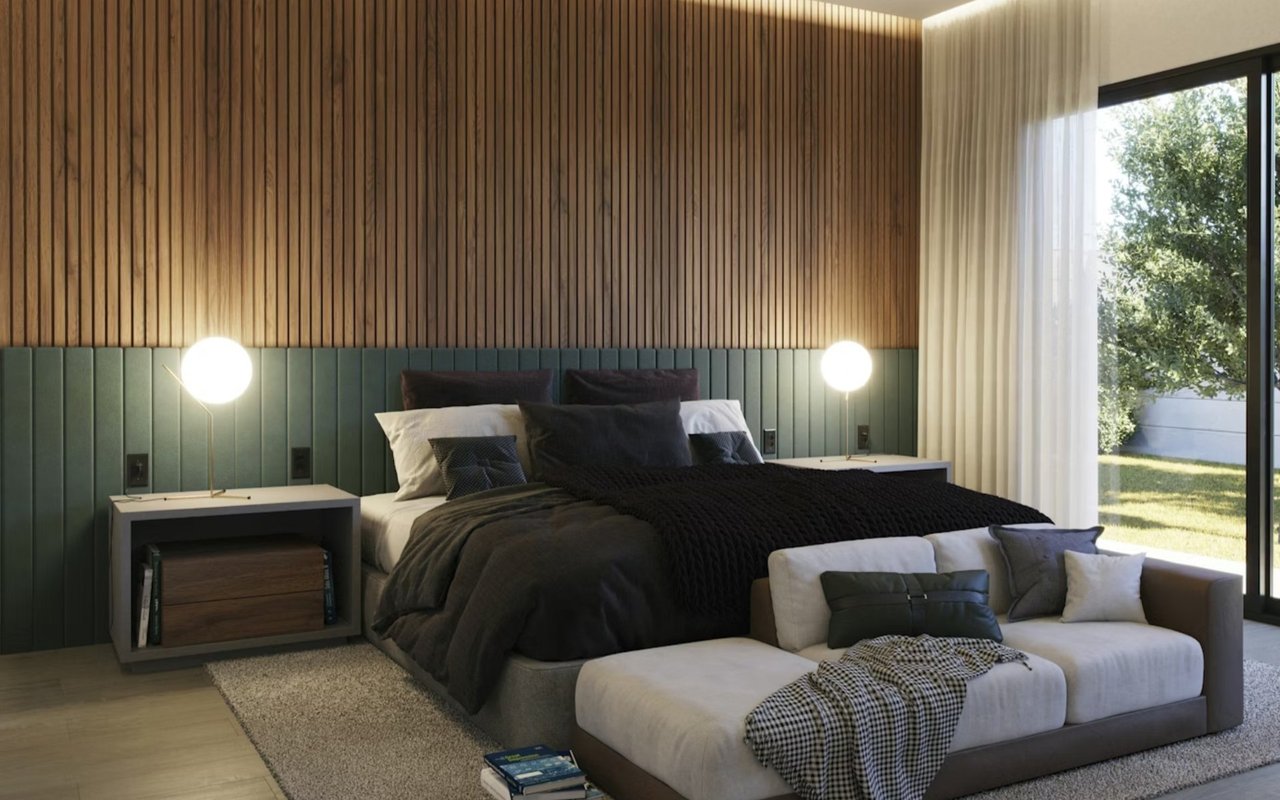
Beyond temperature, light, and sound, the overall design of the bedroom sends signals to the brain. The 2026 direction in bedroom interiors is toward warm, calm palettes — soft neutrals, muted greens, and earthy tones that reduce visual stimulation and help the nervous system slow down. The movement away from stark minimalism and toward layered, tactile warmth is backed by psychology: spaces that feel calm and uncrowded help the brain release waking alertness.
Design choices that support a restful bedroom environment:
- A warm, neutral palette: Sandy tones, warm whites, and muted earth shades work naturally in Manhattan Beach homes and create a restful visual baseline
- Furniture that fits the room: Overcrowded bedrooms raise cortisol; a well-proportioned bed, two nightstands, and thoughtful storage create the spaciousness that sleep requires
- A dedicated sleep zone: Keep work materials, exercise equipment, and screens out of the bedroom entirely — the brain learns to associate spaces with activities, and a bedroom used for work becomes harder to sleep in
- Natural materials where possible: Linen, wood, cotton, and stone create a warmer sensory environment than synthetics and plastics, which read as more stimulating to the nervous system
FAQs
Does the mattress matter as much as people say?
Yes. The mattress is the foundation of the sleep environment, and no amount of good lighting or temperature control compensates for one that doesn't fit how you sleep. That said, mattress choice is highly individual — sleep position, body weight, and temperature preferences all factor in. What's universal is that an old or unsupportive mattress is worth addressing before adding other sleep environment upgrades.
Is it worth investing in a smart thermostat for sleep?
For Manhattan Beach homeowners with older HVAC or heating systems, a smart thermostat that can be scheduled to drop to your target sleep temperature before bedtime is one of the most practical investments you can make. Many models are compatible with boiler and radiator systems common in the South Bay's older housing stock.
How much does bedroom design actually affect sleep quality?
Meaningfully. The National Sleep Foundation links room temperature, light exposure, and noise directly to sleep duration and quality. Design changes that address these three variables compound over time — better sleep improves energy, focus, mood, and long-term health. The bedroom is the room worth getting right.
Find Your Manhattan Beach Home With Jambi Property Management
Whether you're searching for a property with a primary suite designed for genuine rest or preparing to make changes to a home you already own, we understand what makes a South Bay home work for the way people actually live. Reach out to us to learn more about our work in Manhattan Beach and let's start a conversation.